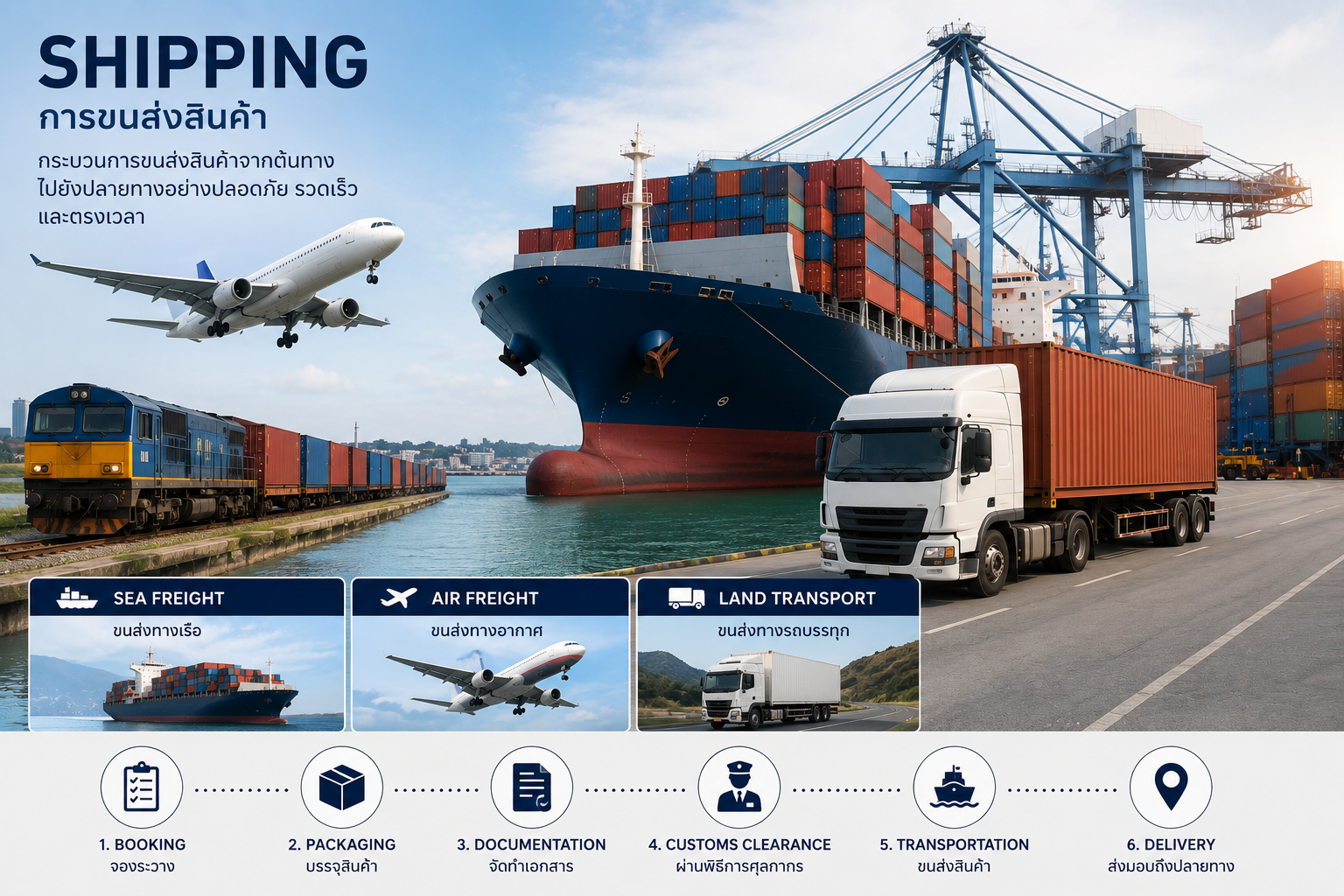
Export Process: A Step-by-Step Guide to Exporting Goods from Thailand
Export Process: A Step-by-Step Guide to Exporting Goods from Thailand
Export Process
Exporting goods is a structured process that involves coordination among exporters, freight forwarders, customs authorities, carriers, and overseas buyers. Proper preparation helps ensure compliance with regulations, minimizes delays, and improves the efficiency of international trade.
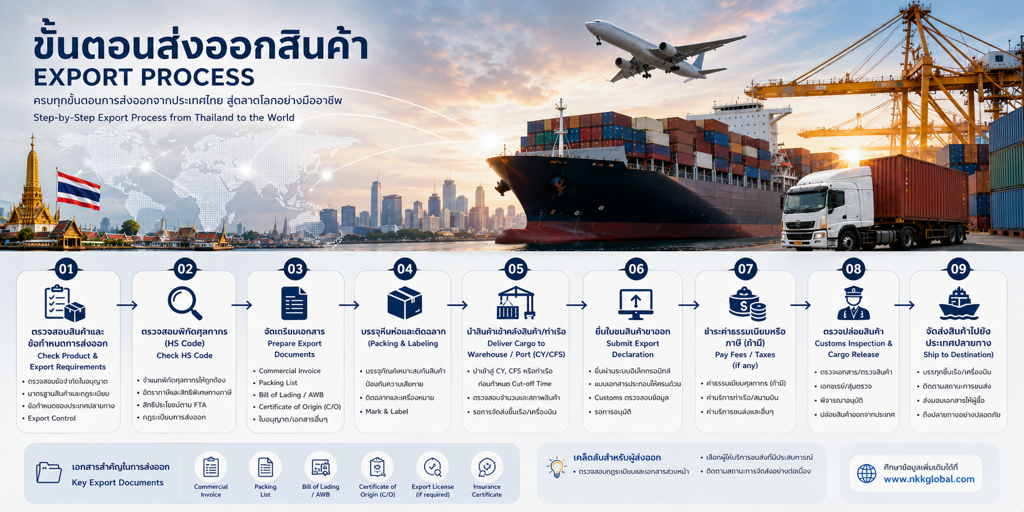
The export process generally consists of nine key steps.
1. Check Product and Export Requirements
Before exporting, verify whether your product is subject to export controls, licensing requirements, or specific regulations in the destination country. Import regulations, product standards, labeling requirements, and technical specifications may vary depending on the market.
2. Determine the HS Code
The Harmonized System (HS) Code is an internationally recognized product classification system. It is used to determine customs procedures, tariff preferences under Free Trade Agreements (FTAs), and statistical reporting. Accurate classification helps prevent customs delays and declaration errors.
3. Prepare Export Documents
Typical export documents include:
- Commercial Invoice
- Packing List
- Bill of Lading (B/L) or Air Waybill (AWB)
- Certificate of Origin (if applicable)
- Export License (for controlled goods)
- Insurance Certificate (if applicable)
All documents should contain consistent and accurate information.
4. Pack and Label the Goods
Goods should be packed according to the nature of the cargo and the chosen mode of transport. Proper packaging protects products during transit, while clear shipping marks and labels facilitate handling, customs inspection, and final delivery.
5. Deliver Cargo to the Warehouse or Port
Cargo is delivered to a Container Yard (CY), Container Freight Station (CFS), airport cargo terminal, or seaport before the carrier's cut-off time. Timely delivery is essential to avoid shipment delays.
6. Submit the Export Declaration
The exporter or customs broker submits the export declaration electronically through the customs system, together with the required supporting documents. Customs authorities review the information before approving the shipment for export.
7. Pay Applicable Fees (If Required)
Most exports from Thailand are not subject to export duty. However, certain products may require payment of government fees, inspection charges, or other applicable costs depending on the nature of the goods and relevant regulations.
8. Customs Inspection and Cargo Release
Customs may conduct documentary reviews, X-ray scanning, or physical inspections depending on the risk assessment. Once all requirements are satisfied, the shipment is cleared for export.
9. Ship Goods to the Destination Country
After customs clearance, the cargo is loaded onto the selected carrier and transported to the destination country. Exporters should monitor shipment status and provide the required shipping documents to the importer for customs clearance at the destination.
Frequently Asked Questions (FAQ)
What documents are commonly required for export?
The most common documents include a Commercial Invoice, Packing List, Bill of Lading or Air Waybill, Certificate of Origin (where applicable), and any required export licenses.
Why is the HS Code important?
The HS Code determines product classification, customs procedures, tariff treatment, and eligibility for Free Trade Agreement (FTA) benefits.
Do all exported goods from Thailand require export duty?
No. Most goods exported from Thailand are exempt from export duty. However, certain products may be subject to specific government fees or regulatory requirements.
Conclusion
A successful export operation requires careful planning, accurate documentation, compliance with customs regulations, and effective coordination among all parties involved. Understanding each step of the export process helps businesses reduce risks, improve operational efficiency, and ensure goods reach international markets smoothly.
For more information about international logistics, import/export procedures, and customs clearance, please visit:
Lastest Knowledge Article
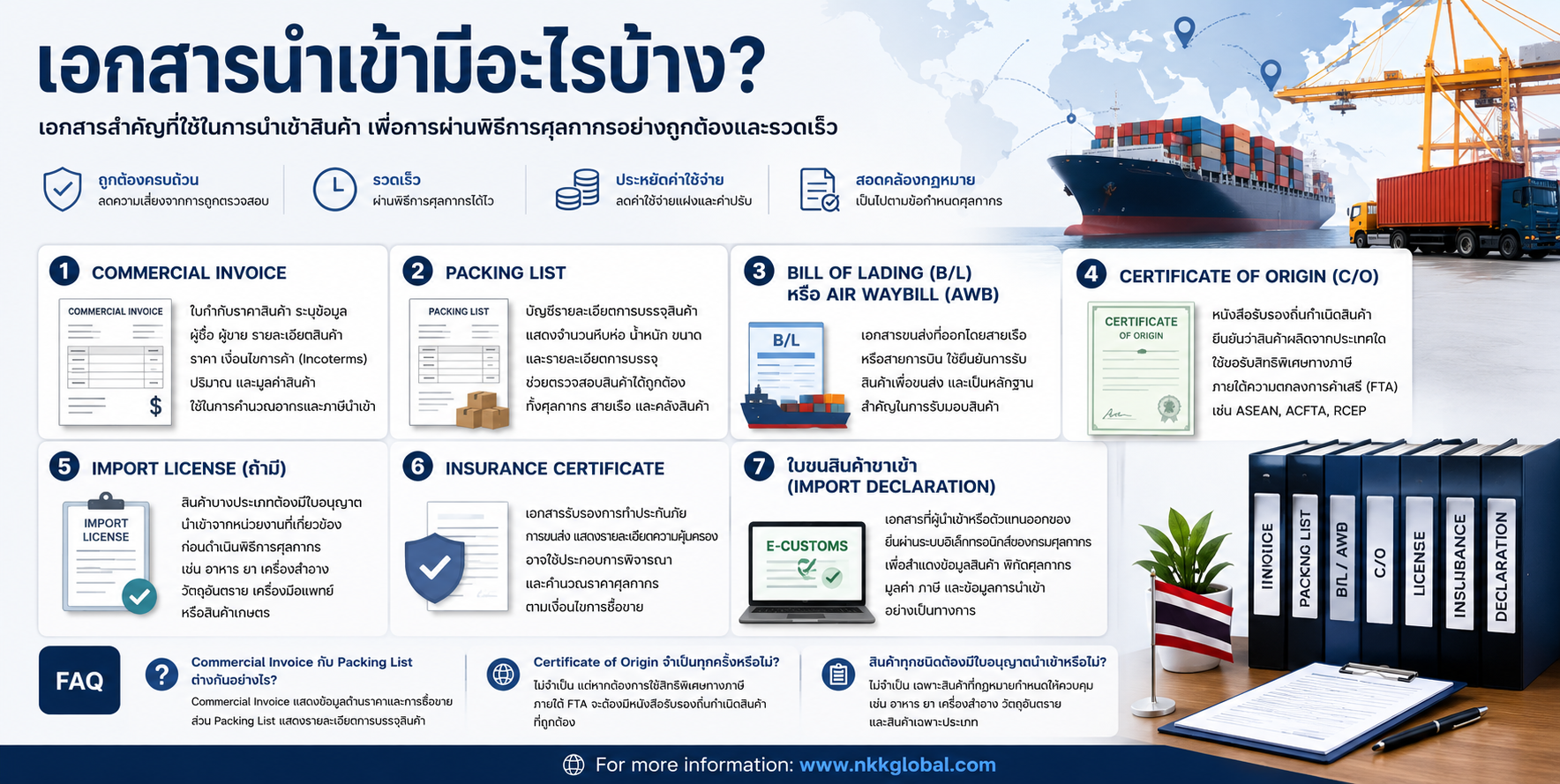
What Documents Are Required for Import?
21 July 2026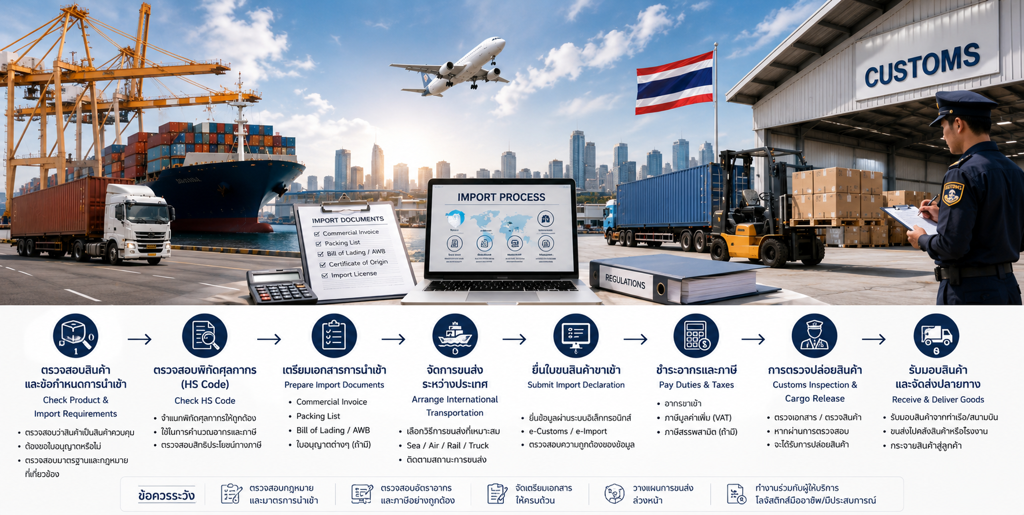
Import Process to Thailand: Step-by-Step Guide
21 July 2026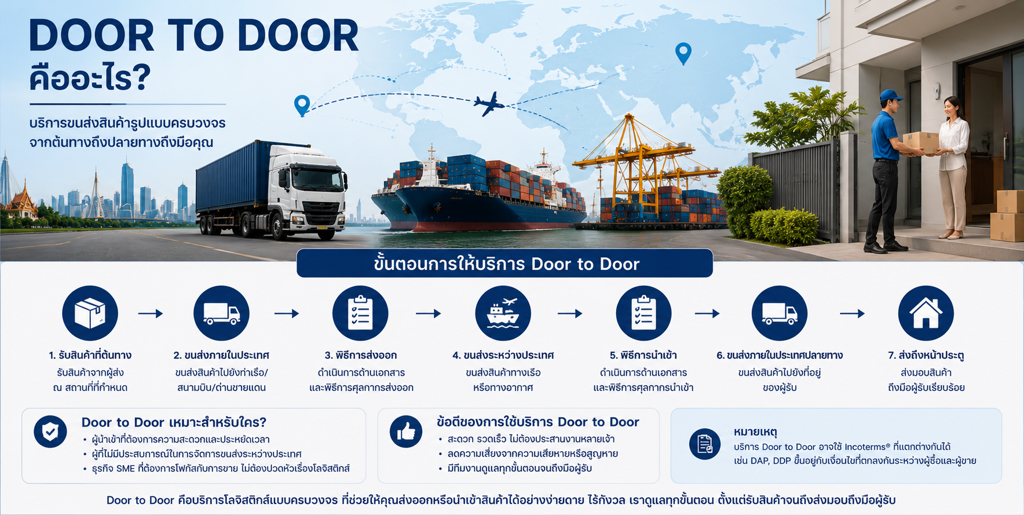
What Is Door to Door Shipping?
20 July 2026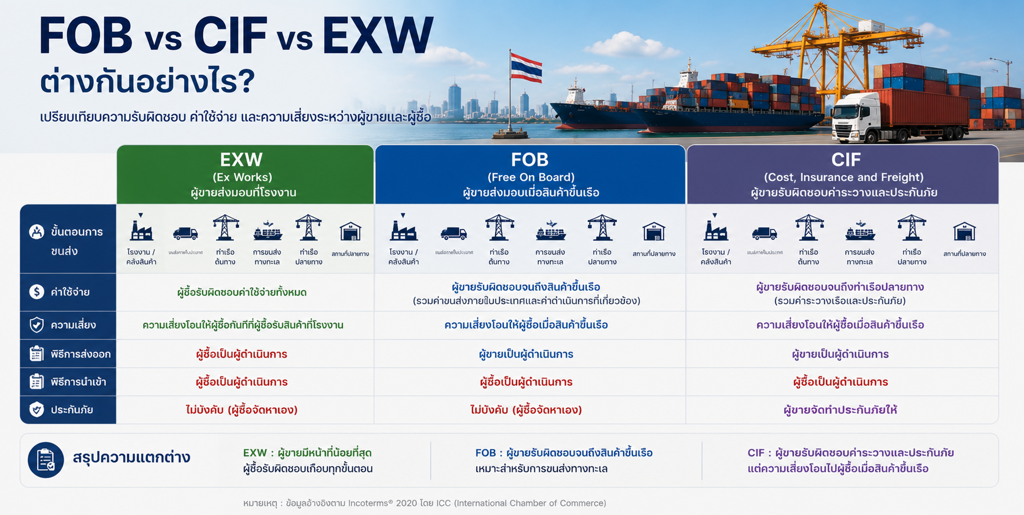
FOB vs CIF vs EXW: What's the Difference?
20 July 2026
LCL vs FCL
20 July 2026
What is a Customs Broker?
20 July 2026